About Patterns Roses Digital Paper, JPEG
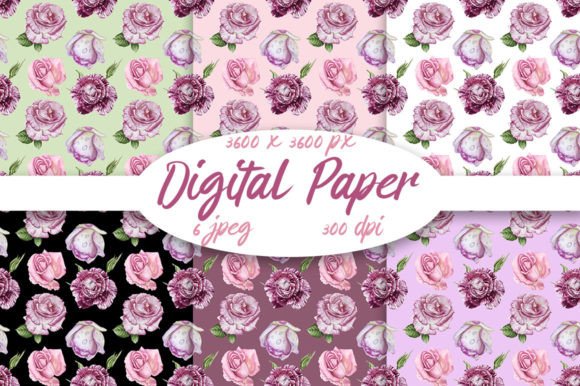
If you’ve ever spent 20 minutes searching for the *right* floral background—something elegant but not fussy, romantic but not cliché, printable yet web-ready—you already know how much time a well-designed seamless pattern can save. About Patterns Roses Digital Paper, JPEG is exactly that: six high-resolution, thoughtfully crafted rose-themed digital papers, delivered as JPEG files (3600×3600 pixels, 300 dpi), ready to drop into your next project without wrestling with layers, tiles, or color shifts.
What makes these roses different from other floral patterns?
These aren’t scanned vintage wallpapers or AI-generated florals with uneven stems and floating petals. Each of the six patterns in About Patterns Roses Digital Paper, JPEG was designed to tile seamlessly—meaning no visible edges or breaks when repeated across large areas. That’s essential whether you’re wrapping a PDF newsletter, designing a Shopify product banner, or printing a 24×36-inch wall art poster. The roses are stylized with soft outlines, subtle shading, and balanced negative space—so they recede gracefully behind text or photos instead of competing with them.
Where people actually use these digital papers—no guesswork needed
Bloggers and content creators often reach for these when building branded Pinterest pins or Canva social templates. One freelance lifestyle writer uses the light blush rose pattern as a consistent background across her monthly email headers—it adds warmth without distracting from her CTA buttons. Another educator creating printable lesson planners swaps between two of the patterns (a muted sage-and-cream version and a deeper burgundy-on-ivory) to signal different subject categories—students instantly recognize “math week” vs. “literature week” by the background alone.
Small business owners use them more than you’d expect—not just for logos or packaging, but for practical, everyday assets. A ceramicist in Portland uses the darkest rose pattern as the background for her wholesale order forms (printed on recycled cardstock), giving invoices quiet sophistication. A wedding stationery designer layers one of the lighter patterns beneath transparent vellum overlays on physical invitations—scanning beautifully while adding tactile depth. Even local coffee shops have used them: one printed the softest variant onto kraft paper bags for seasonal latte promotions, then reused the same file for Instagram Story highlights and menu board graphics.
Freelancers and designers appreciate how quickly these integrate into client workflows. No need to license expensive stock textures or spend hours masking out backgrounds. Since each JPEG is 3600×3600 at 300 dpi, it scales cleanly from tiny favicons (resized down) to large-format prints (like fabric mockups or trade show backdrops). A branding consultant told us she keeps all six in a dedicated “client-ready textures” folder—pulling one up in under 10 seconds when a startup needs a quick pitch deck background that feels intentional, not generic.
Realistic considerations before downloading or using
First: yes, colors may vary slightly across devices. That’s normal—and expected—with any digital file viewed on different monitors, phones, or tablets. If you’re printing final deliverables (like greeting cards or packaging), always soft-proof in your editing software first and run a small test print. The JPEG format means these are ready to use *immediately*, but they’re not editable vector files—so don’t expect to change individual rose colors or rearrange stems. What you get is polish, not flexibility.
Second: seamless doesn’t mean invisible. These patterns have rhythm and repetition—some more obvious than others. If your project calls for ultra-minimalist, almost blank backgrounds (think white-on-white micro-texture), the bolder rose variants might feel too present. Flip through all six before committing to one; the lightest option has barely-there watercolor washes, while the richest features layered petal shadows and fine line details. Matching pattern weight to your content’s tone matters more than you think.
Third: licensing is straightforward but important. These are for both personal and commercial use—meaning you can sell products featuring them (like printable planners, mugs, or fabric), as long as you’re not reselling the JPEGs themselves as standalone digital papers. No attribution required, but please don’t upload them to free graphic resource sites or share the download link publicly.
How educators and hobbyists get unexpected mileage from these
A homeschool parent uses the rose patterns to design custom flashcards—printing two per page on cardstock, cutting, and laminating. The floral background helps visual learners anchor vocabulary words without overwhelming the text. Meanwhile, a fiber artist digitizes embroidery patterns and overlays them on the softest rose paper before exporting to her machine’s software—giving her designs a cohesive, gallery-ready preview. Even retirees planning family photo books choose these over plain white backgrounds; one shared that her grandchildren now ask, “Which rose page are we on today?”—turning organization into a gentle, joyful ritual.
Why JPEG—not PNG or PSD—works better for most users
Some users hesitate when they see “JPEG only,” assuming it limits their options. But here’s what happens in real life: PNGs with transparency add complexity when layering over colored layouts. PSDs require Photoshop—and often sit unused on hard drives. JPEGs open in *anything*: Preview on Mac, Photos on Windows, Canva, Google Slides, Adobe Express, even basic word processors. You can drag one straight into an email signature builder or upload it to a print-on-demand platform like Printful without conversion steps. For 95% of users—especially those juggling multiple tools or tight deadlines—that simplicity isn’t a compromise. It’s relief.
Ultimately, About Patterns Roses Digital Paper, JPEG isn’t about filling space. It’s about adding quiet intention to things people make every day—whether that’s a teacher’s handout, a founder’s investor deck, a crafter’s Etsy listing, or a grandparent’s memory journal. It’s the kind of detail that doesn’t shout—but makes people pause, smile, and think, “This feels cared for.” And in a world of rushed downloads and generic templates, that small feeling changes how your work lands.