Why the Geometric Patterns Collection Is Reshaping Creative Workflows for Professionals
In today’s visually saturated digital and physical landscape, consistency, scalability, and aesthetic cohesion aren’t just desirable—they’re operational necessities. Whether you're a brand strategist refining a client’s visual identity, a freelance designer building a custom Shopify theme, or an entrepreneur crafting a cohesive product line for Etsy or Amazon, your ability to deploy high-fidelity, adaptable design assets directly impacts speed, professionalism, and perceived value. Enter the Geometric Patterns Collection: not merely a set of decorative files, but a purpose-built toolkit engineered for real-world creative execution.
What the Geometric Patterns Collection Actually Delivers—Beyond the Surface
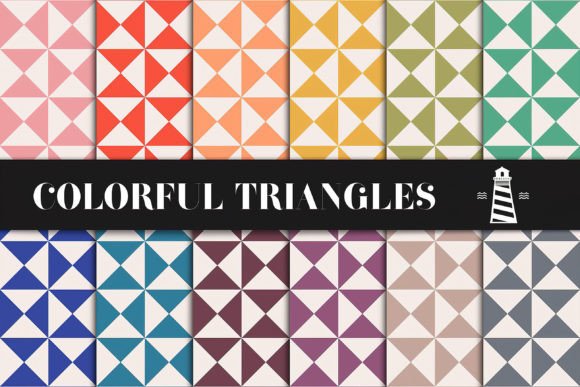
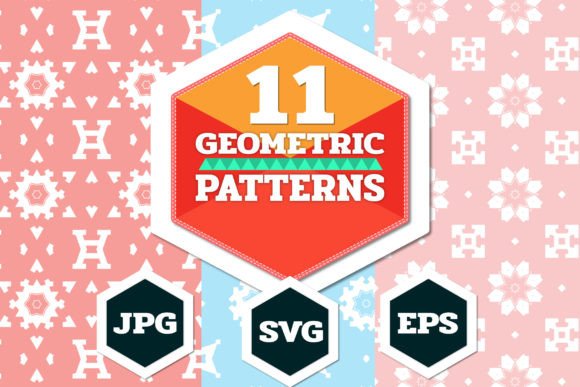
The Amazing Collection of eleven geometric patterns in pastel colors is intentionally curated—not algorithmically generated. Each of the 11 designs balances mathematical precision with soft, human-centered color psychology: think muted sage hexagons beside blush-dusted chevrons, or airy dot grids layered over subtle triangular lattices—all rendered in harmonious pastel palettes that align with current UI/UX best practices around accessibility, calm engagement, and inclusive tone.
Crucially, this isn’t a “one-format-fits-all” download. It includes 11 JPG files (300dpi, 2800 px × 2800 px) for immediate use in print-ready layouts, social media banners, or physical packaging mockups; 11 EPS files, fully editable in Adobe Illustrator, CorelDRAW, and Affinity Designer—ideal for scaling across signage, merch, or vector-based branding systems; and 11 SVG files, optimized for responsive web use, CSS integration, and dynamic loading in modern frameworks like React or Vue.
This multi-format architecture reflects a deeper shift in how professionals operate: no longer choosing between “print-ready” or “web-optimized,” but expecting both—simultaneously, without compromise.
Aligning With Macro Trends in Design, Business, and Technology
The rise of the Geometric Patterns Collection mirrors three converging industry movements:
- Design Democratization Meets Professional Rigor: Tools like Canva and Figma have lowered entry barriers—but they’ve also raised expectations. Clients now assume polished visuals are table stakes. Yet time-strapped freelancers can’t afford to build every background from scratch. This collection bridges that gap: it offers production-grade assets that retain full editability and technical fidelity, enabling rapid iteration without sacrificing control.
- The Pastel Renaissance in Brand Strategy: Pastel palettes are no longer niche—they’re strategic. Research from Pantone and Adobe’s 2024 Creative Trends Report confirms sustained growth in soft, low-saturation hues across SaaS dashboards, wellness brands, educational platforms, and sustainable product lines. Why? Because they signal approachability without sacrificing sophistication—and reduce cognitive load in interface-heavy environments. The Geometric Patterns Collection leverages this insight deliberately: its palette supports readability on screen, translates well to uncoated paper stock, and avoids the visual fatigue associated with high-contrast neon trends.
- Workflow Convergence Across Media: Print, web, and physical product design are no longer siloed disciplines. A single brand launch may require Instagram carousels, a Kickstarter campaign page, letterpress business cards, and reusable tote bag prints—all needing consistent pattern language. The Geometric Patterns Collection anticipates this reality: its uniform 2800 px × 2800 px resolution ensures crisp output at common print sizes (A4, US Letter, 12×12 scrapbook pages), while SVG and EPS formats scale infinitely for retina displays or large-format signage.
Real-World Applications: Where This Collection Adds Tangible Value
Let’s move beyond abstraction. Here’s how professionals are integrating the Geometric Patterns Collection into active projects—today:
- Freelance Web Designers: Using SVG versions as CSS background patterns in Figma prototypes—then exporting the same assets directly into production code. No re-exporting, no pixelation, no version drift.
- E-commerce Entrepreneurs: Applying JPG backgrounds to product mockups (e.g., pastel triangle patterns behind ceramic mugs or skincare bottles), then using EPS files to create matching labels and shipping sticker templates in Illustrator—ensuring visual continuity from online store to unboxing experience.
- Marketing Teams: Embedding SVG patterns into email newsletter headers (via inline SVG for broad client compatibility) and reusing EPS variants in PowerPoint decks for investor pitches—maintaining brand texture across touchpoints without bloating file sizes.
- Decoupage Artists & Craft Businesses: Printing JPGs on premium decoupage paper (300dpi ensures clean edges when cut), then layering them onto wooden trays or glassware—where the subtle geometry adds depth without overwhelming hand-painted details.
- KDP Authors & Self-Publishers: Selecting EPS files to build custom Kindle cover backgrounds in Affinity Publisher—scaling seamlessly to Amazon’s required dimensions while preserving anti-aliased edges and smooth gradients.
Why Technical Specifications Matter More Than Ever
Notice what’s absent from this collection: PNGs with transparent backgrounds (which introduce unnecessary complexity for seamless tiling), low-res JPEGs (which fail print QA), or proprietary formats locked to single software ecosystems. Instead, the inclusion of EPS, SVG, and high-resolution JPG is a quiet but powerful statement about interoperability.
EPS remains the gold standard for cross-platform vector editing—critical for agencies working across Adobe, Corel, and Affinity ecosystems. SVG delivers lightweight, scriptable, SEO-friendly vector graphics that render instantly on any device and integrate natively with modern CMS platforms. And the 300dpi, 2800 px × 2800 px JPG specification meets exacting standards for commercial printing—including offset lithography and dye-sublimation—without requiring upscaling or interpolation that degrades clarity.
This isn’t over-engineering. It’s responsiveness to actual constraints: tight deadlines, multi-software teams, hybrid deliverables, and clients who demand both digital agility and physical polish.
Shifting Expectations: From “Nice to Have” to “Non-Negotiable”
A decade ago, designers might have sourced free patterns from open repositories—only to spend hours adjusting spacing, recoloring, or rebuilding broken vectors. Today, professionals prioritize time integrity: the certainty that an asset will work, as promised, in their existing stack. That expectation has reshaped procurement behavior. Subscriptions are rising—but so is demand for one-time, high-value purchases that eliminate recurring friction.
The Geometric Patterns Collection answers that need precisely. Its eleven patterns aren’t arbitrary variations—they’re thoughtfully sequenced to support hierarchy and contrast: some optimized for subtle texture (e.g., fine dot grids), others for bold framing (e.g., wide-chevron borders), all built on shared grid logic that allows mixing and matching within a single project without visual dissonance.
That level of intentionality signals maturity—not just in design, but in understanding how creators actually work: iteratively, collaboratively, and across shifting technical boundaries.
Looking Ahead: Patterns as Infrastructure, Not Decoration
As generative AI accelerates asset creation, the value proposition of human-crafted, technically rigorous pattern libraries only strengthens. AI excels at variation—but struggles with contextual consistency, color harmony across media, and production-grade file hygiene. The Geometric Patterns Collection doesn’t compete with AI; it complements it. Think of it as foundational infrastructure: the reliable, editable, cross-compatible base layer upon which AI-assisted customization—like automated recoloring or layout adaptation—can be meaningfully applied.
For professionals navigating an era of accelerated output demands and heightened aesthetic scrutiny, this collection represents more than convenience. It’s a commitment to craft, clarity, and continuity—delivered in eleven meticulously calibrated files.
Whether you’re launching a mindful lifestyle brand, redesigning a corporate intranet, or handcrafting limited-edition stationery, the Geometric Patterns Collection provides the structural confidence to focus where it matters most: on strategy, storytelling, and human connection—not file format troubleshooting.