Christmas 3D Patterns: Practical Tips for Choosing, Using, and Getting Real Value
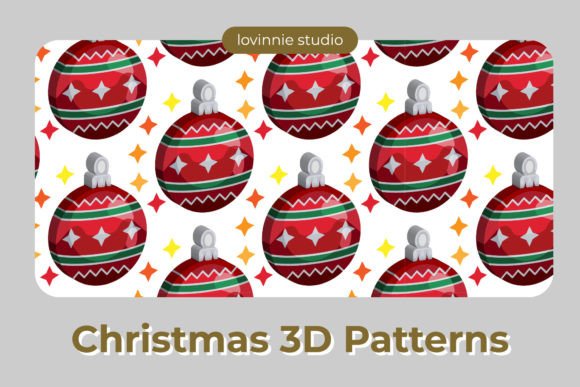
Christmas 3D patterns bring depth, dimension, and festive energy to holiday designs — whether you're crafting social media graphics, printing custom wrapping paper, cutting vinyl decals, or preparing merch for your small business. Unlike flat vector motifs or basic clipart, these patterns use shading, perspective, and layered elements to simulate real-world texture and volume. That visual richness makes them especially useful for creators who want their holiday projects to stand out without needing advanced 3D modeling skills.
What Many Overlook Before Downloading Christmas 3D Patterns
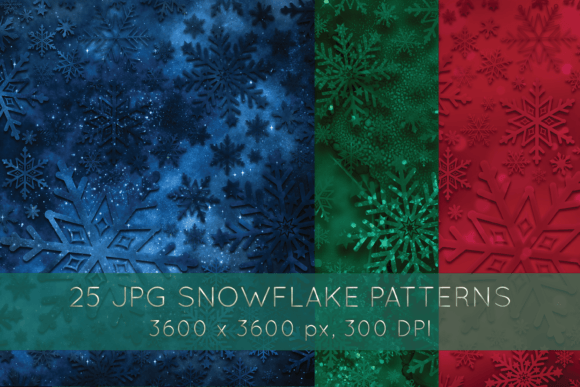
A common assumption is that “3D” means the file itself is editable in 3D software like Blender or Maya. It’s not. These are 2D files designed to look three-dimensional — think embossed snowflakes, raised reindeer silhouettes, or glossy gift boxes with realistic highlights and shadows. Confusing this distinction can lead to wasted time trying to rotate or extrude layers in Illustrator when the design wasn’t built for that kind of manipulation.
Another frequent oversight? Ignoring how format compatibility affects your actual workflow. You might buy a beautiful Christmas 3D pattern in EPS, only to discover later it doesn’t scale cleanly in Cricut Design Space (which prefers SVG or DXF) or lacks transparency for web overlays (where PNG is essential). Not all formats behave the same way — and choosing the wrong one can mean extra conversion steps, loss of crispness, or missing layers.
Why File Format Choice Matters More Than You Think
Each of the six available formats — AI, EPS, SVG, DXF, JPG, and PNG — serves a distinct purpose:
- AI and EPS: Best for professional designers using Adobe Illustrator. They preserve vector scalability and editable paths — ideal if you plan to recolor, resize, or adjust individual pattern elements.
- SVG: Perfect for web use, digital invitations, or platforms like Canva and Silhouette Studio. Keeps clean edges at any size and supports transparency.
- DXF: The go-to for CNC machines, laser cutters, and craft cutters. Ensures precise line-based outlines — but won’t retain color or gradients.
- PNG: Great for quick overlays, social posts, or presentations where transparency matters. Raster-based, so avoid extreme enlarging.
- JPG: Useful for mockups or email previews, but lacks transparency and compresses detail — not recommended for editing or print prep.
Choosing based on your next step, not just familiarity, saves hours. For example, a blogger adding a subtle background to a holiday newsletter should grab the PNG. A maker producing physical ornaments? Prioritize SVG or DXF. An educator designing classroom posters? AI or EPS gives full control over colors and spacing.
Watch Out for “Editable” Claims That Don’t Deliver
Some listings promise “fully editable” Christmas 3D patterns — yet deliver flattened JPGs or rasterized PNGs with no layers or grouped objects. This isn’t the case here: each format maintains structural integrity. The AI and EPS files contain organized layers (e.g., shadow, base shape, highlight), the SVG retains named groups, and even the DXF preserves clean, closed paths. That means you can isolate a single holly leaf to recolor it — or remove a shadow layer entirely — without guesswork or destructive editing.
If you’ve ever struggled with a “3D” pattern that turned blurry when enlarged or refused to separate into parts, it likely wasn’t built with true vector discipline. These Christmas 3D patterns were created with consistent anchor density, non-destructive effects, and logical grouping — making edits predictable, not frustrating.
Canvas Size Isn’t Just About Pixels — It’s About Flexibility
The fixed canvas size of 1920 px × 1280 px applies uniformly across all formats — but its impact varies. In vector files (AI, EPS, SVG, DXF), this is simply a bounding frame; you can scale infinitely without quality loss. In raster files (JPG, PNG), it sets the maximum resolution before pixelation occurs. At this size, the PNG and JPG are sharp enough for HD presentations, blog headers, or tablet displays — but not intended for large-format print like banners or vehicle wraps.
If your project requires larger output, start with the vector versions and export fresh raster assets at your target dimensions. That avoids upscaling artifacts and keeps file sizes lean.
Real-World Use Cases — and What to Check First
Before downloading or purchasing, ask yourself:
- What’s my primary tool? If you use Affinity Designer, confirm EPS or SVG compatibility (some older EPS versions don’t import cleanly). If you’re on Procreate, you’ll need PNG — but know it’s raster-only.
- Do I need transparency? Yes? Skip JPG. Choose PNG or SVG.
- Will this be cut or engraved? Then DXF is safer than SVG — many machines interpret DXF paths more reliably.
- Am I sharing with others? AI files require Illustrator licenses. SVG or PNG offer broader accessibility.
For instance, a small business owner launching holiday packaging might use the AI file to adjust spacing for a specific box size, then export an SVG for their printer’s dieline software — and a PNG for their Instagram story. Each format plays a role, not just a backup.
A Final Note on Value and Long-Term Use
These Christmas 3D patterns aren’t one-season assets. Because they’re built with reusable components (repeating motifs, modular elements, and balanced negative space), you can adapt them beyond December — think New Year’s confetti textures, winter-themed branding, or even subtle background elements for Q1 sales campaigns. The attention to clean vectors, consistent proportions, and intentional layering means they age well and integrate smoothly into future projects.
Thank you for visiting our shop — and thank you for choosing designs built with practicality in mind. Whether you’re just starting out or refining your creative process, having reliable, well-structured Christmas 3D patterns helps you focus on what matters most: bringing your ideas to life — clearly, confidently, and without unnecessary roadblocks.