Psychedelic Patterns: A Strategic Asset for Modern Creative Professionals
In today’s saturated visual landscape—where attention is fragmented, platforms demand pixel-perfect consistency, and brand differentiation hinges on authentic aesthetic intelligence—Psychedelic Patterns have evolved far beyond nostalgic ornamentation. They are now a high-fidelity, production-ready design resource engineered for precision, scalability, and cross-platform cohesion. At their core, these are not merely “trippy” motifs; they are meticulously crafted, seamlessly repeating vector patterns, optimized for professional use at print and digital scale.
What Exactly Are Psychedelic Patterns?
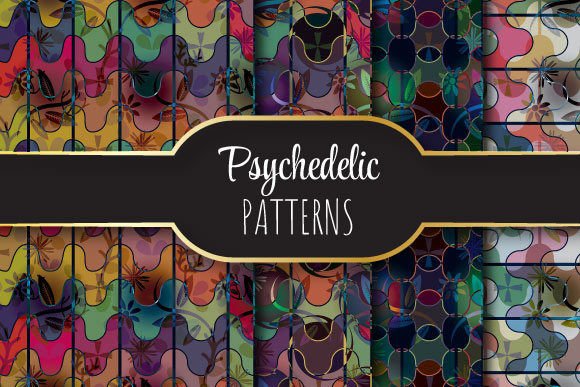
Psychedelic Patterns refer to a curated family of vector-based designs rooted in optical rhythm, chromatic resonance, and geometric recursion—hallmarks of mid-century visual experimentation, reimagined through contemporary technical rigor. Unlike static textures or raster-based repeats, each pattern is built as a mathematically precise tile that aligns flawlessly edge-to-edge across any surface. This ensures infinite scalability without degradation—critical for applications ranging from luxury packaging and immersive web backgrounds to large-format exhibition graphics and AR-integrated interfaces.
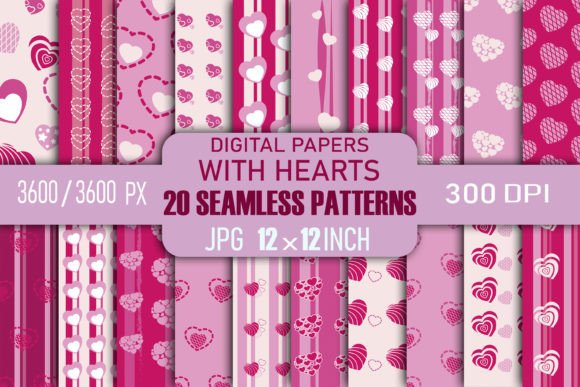
Each file in this collection measures 12 x 12 inches (3600 x 3600 pixels at 300dpi), meeting stringent commercial print requirements while retaining full fidelity for high-resolution digital displays. The EPS 10 format guarantees backward compatibility with legacy design suites and forward readiness for AI-assisted vector editing workflows. The accompanying 4 JPEG files—generated at identical resolution and color profile—provide immediate usability for CMS integration, social media templates, and rapid prototyping. All assets are delivered in a single, lightweight ZIP archive, streamlining asset management without compromising integrity.
Why This Timing? Contextual Relevance in a Shifting Creative Economy
The rise of Psychedelic Patterns reflects deeper shifts across multiple domains—not as a trend, but as a response to converging pressures:
- Attention Economics: With average user dwell time on visual content dropping below 1.7 seconds (per 2024 eye-tracking studies), designers increasingly rely on perceptual hooks—subtle motion cues, rhythmic contrast, and harmonic color layering—that Psychedelic Patterns deliver inherently. Their structured complexity triggers micro-engagement without visual noise.
- Brand Authenticity Demands: Consumers reject algorithmically generic aesthetics. In a market where 68% of B2B buyers cite “distinctive visual identity” as a key factor in vendor selection (McKinsey, 2023), Psychedelic Patterns offer a shortcut to differentiated yet cohesive expression—whether applied to a fintech dashboard background or an artisanal skincare label.
- Workflow Efficiency Imperatives: Freelancers and in-house teams face tighter deadlines and broader scope. Pre-built, production-grade seamlessly repeating vector patterns eliminate hours spent calibrating tile boundaries, adjusting color harmonies, or troubleshooting raster artifacts—freeing cognitive bandwidth for strategic design decisions.
Real-World Applications: Beyond Decoration
Consider how Psychedelic Patterns function in practice—not as decorative flourishes, but as functional design systems:
- Dynamic Brand Extensions: A wellness startup uses one pattern variant as the base layer for its app interface, another (with adjusted saturation) for email headers, and a third (monochrome version) embossed onto sustainable packaging. Because all share identical repeat logic and proportion, the system feels unified—not repetitive.
- Print-to-Digital Continuity: An architecture firm integrates a low-contrast, geometric Psychedelic Pattern into presentation decks, then scales it seamlessly to 8-foot-wide trade show backdrops—no resampling, no visible seams, no color shift between RGB and CMYK outputs thanks to embedded ICC profiles in the EPS.
- Generative Synergy: Designers feed the EPS files into vector-aware AI tools (e.g., Adobe Firefly 3, Affinity Designer’s AI extensions) to generate derivative motifs, custom color variants, or responsive pattern densities—all while preserving mathematical tiling integrity.
Technical Rigor Meets Creative Flexibility
What distinguishes this collection isn’t just aesthetic intent—it’s engineering discipline. Each seamlessly repeating vector pattern was constructed using non-destructive path operations, fully editable anchor points, and Pantone-referenced swatches. The 300dpi resolution at 12×12 inches ensures crisp output on everything from business cards to billboard wraps. And because the EPS 10 standard supports transparency, clipping masks, and layered structure, users retain full control over blending modes, opacity stacks, and selective recoloring—without flattening or rasterization.
The inclusion of four JPEG variants isn’t redundancy—it’s workflow pragmatism. One JPEG is optimized for sRGB web use (with embedded color profile); another uses Adobe RGB for wide-gamut monitors; a third applies subtle dithering for screen projection fidelity; and the fourth is a flattened, compressed version for CMS uploads where vector support is limited. This multi-format strategy acknowledges that professionals rarely work in a single environment—and shouldn’t be forced to choose between quality and convenience.
Aligning With Broader Industry Trajectories
This release sits at the intersection of three accelerating vectors:
- Design Systems Maturation: As organizations move beyond atomic UI kits toward holistic brand ecosystems, reusable, context-adaptable patterns like these become foundational components—akin to typography scales or spacing tokens—but for texture and rhythm.
- AI-Augmented Creativity: Vector-native assets are uniquely positioned for prompt-driven iteration. Unlike raster images, EPS files allow AI models to interpret structural logic (tile size, symmetry type, gradient direction), enabling precise, editable outputs rather than hallucinated approximations.
- Sustainable Production Standards: High-fidelity, reusable assets reduce redundant creation cycles. A single Psychedelic Pattern can replace dozens of bespoke texture renders—cutting rendering time, energy consumption, and storage overhead across distributed creative teams.
A Note on Intentionality
“Psychedelic” here does not imply chaos or randomness. It references a lineage of intentional perception-shaping—from Bridget Riley’s op art investigations to modern data visualization techniques that use rhythmic patterning to guide the eye through complexity. These patterns are calibrated for clarity, not confusion. Their repetition is exact; their contrast ratios meet WCAG 2.1 AA standards when applied with appropriate foreground text; their color palettes are tested across device gamuts. They are tools for focus—not distraction.
Who Benefits—and How
Professionals gain production certainty: no last-minute tile alignment fixes before press runs. Entrepreneurs accelerate go-to-market visuals without sacrificing polish—launching branded merchandise, pitch decks, or investor reports in under 48 hours. Freelancers expand service offerings (e.g., “pattern-integrated branding packages”) with minimal overhead. Marketers ensure campaign continuity across TikTok ads, direct mail, and physical pop-ups using identical underlying geometry. Even educators use these files to teach vector mathematics, color theory, and cross-media adaptation in real-world contexts.
For enthusiasts, the value lies in accessibility: no subscription, no usage caps, no attribution requirements. Just clean, professional-grade assets—ready to drop into Illustrator, Figma (via SVG conversion), Affinity, or even Blender’s vector import pipeline.
Looking Ahead—Without Speculation
The future of Psychedelic Patterns isn’t about chasing novelty—it’s about deepening utility. We see continued integration with spatial computing interfaces, where seamless tiling enables consistent surface treatment across mixed-reality environments. We anticipate tighter coupling with generative design APIs, allowing developers to parameterize repeat density, hue rotation, or scale modulation via JSON configuration—turning static assets into dynamic design primitives.
But none of that changes the present-day advantage: these are seamlessly repeating vector patterns built for today’s constraints and opportunities—technically robust, aesthetically resonant, and ethically deployed. They reflect a growing consensus among creators: that excellence in visual communication begins not with inspiration alone, but with infrastructure that empowers intention.
If your workflow demands reliability without compromise—if your audience expects distinction without dissonance—if your timeline allows no margin for raster artifacts or misaligned tiles—then Psychedelic Patterns aren’t just relevant. They’re operational leverage.